Himalayas — October 2022
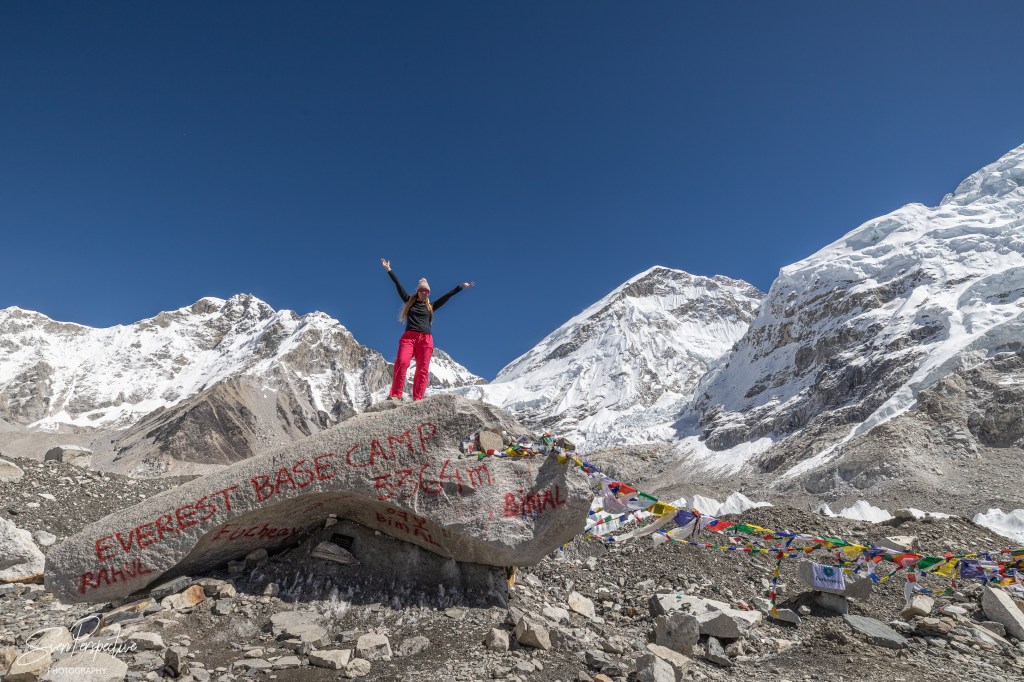
As per my last post in India… Good news! I have found fresh air in the Himalayas in Nepal! Bad news… I spent much of my time above 3,000 meters elevation, thus working extra hard to take in that poorly oxygenated fresh air. Let’s discuss the age old question, What happens to your body at higher alititudes? And finally debunk the live and train low vs high debate.
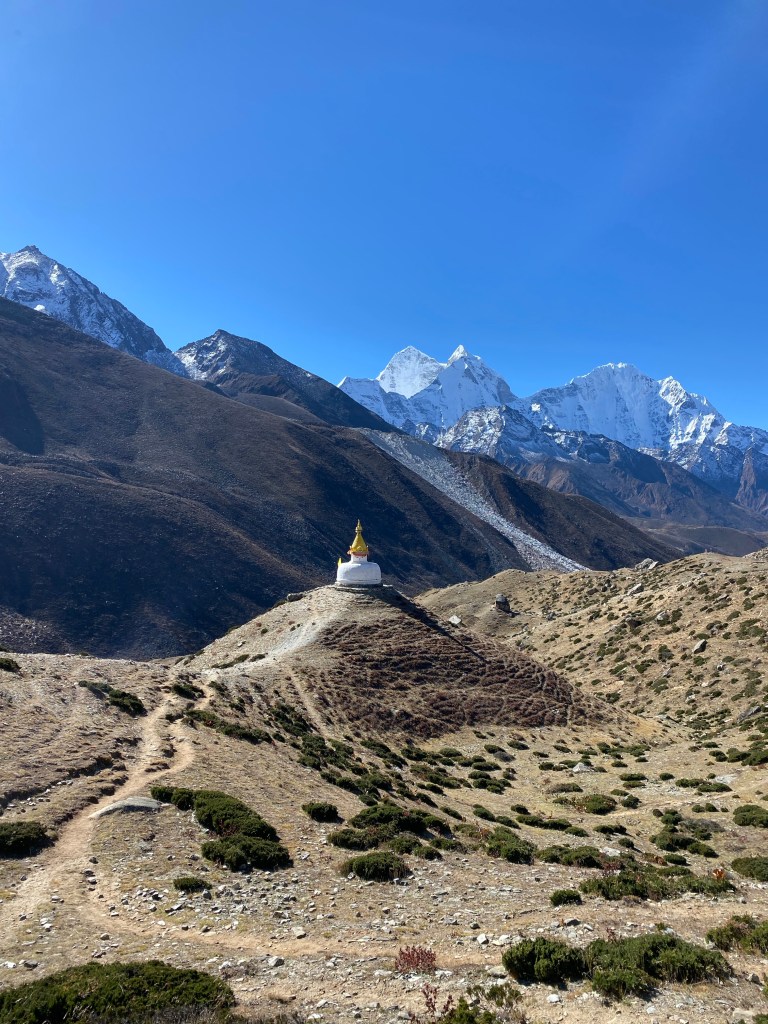
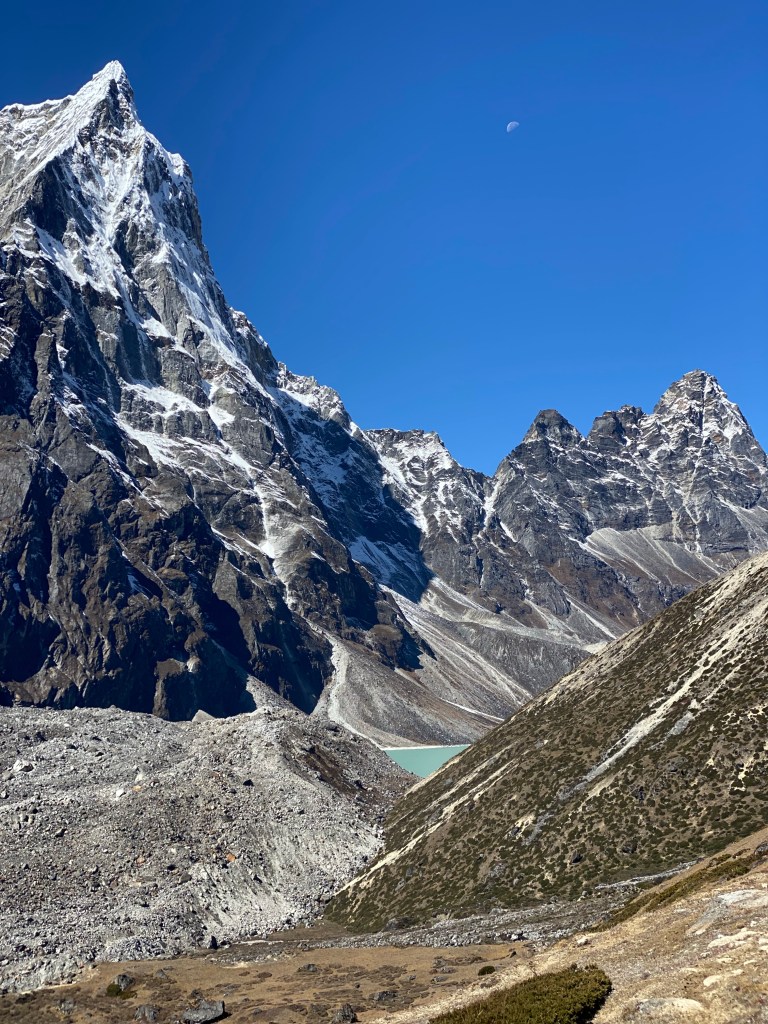
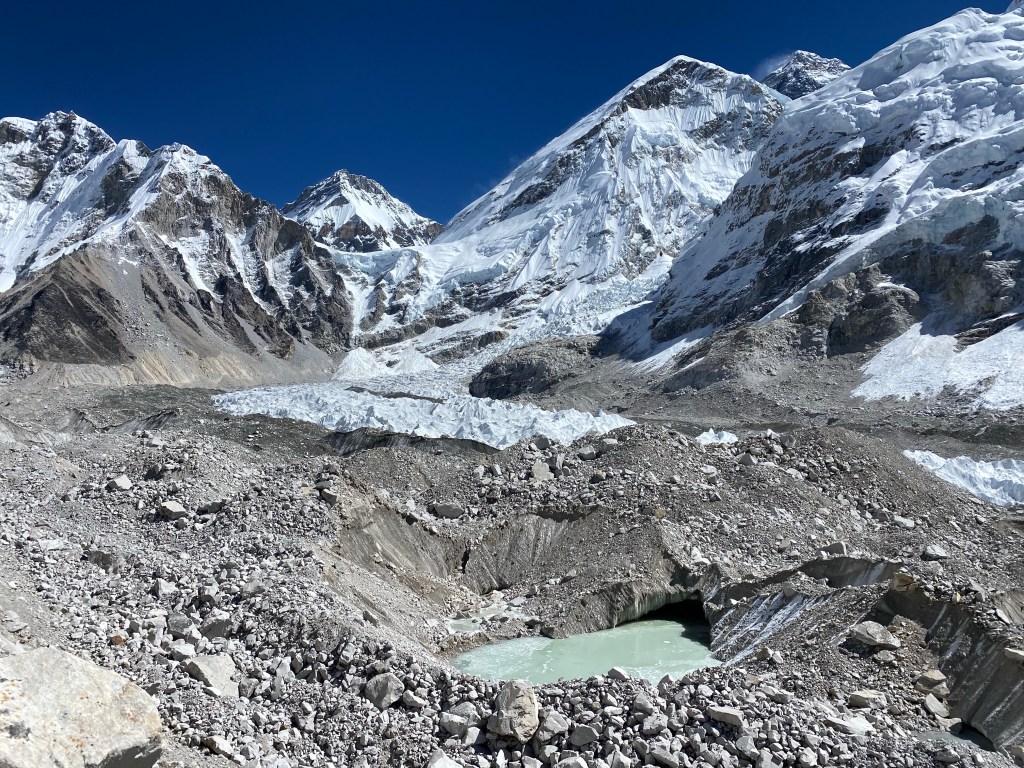
One of my very first blog posts from Peru tackles part of this health debate, but focused more on the side of trying local remedies. In Peru to deal with altitude, I was given coca leaves and essential oils to snap back to life. When I arrived in Nepal, I did not have such a luxury. Kathmandu sits at 1,400 m elevation, and the Everest Base Camp trek ascends from 2,680 m to my highest point of 5,545 m elevation in one week. How did my body react? My resting heart rate normally is about 50bpm, and on the trek it averaged mid-80s bpm. Normal resting heart rate in adults is 60-100bpm. I could feel my heart working hard even at rest. We also measured our SpO2, which is the percent of oxygen saturated hemoglobin in the blood. Normal adult range is 95-100%. My SpO2 numbers slowly declined from low 90s to high 80s to eventually my most sick day at 79%. Above 4,000 m, I will admit my tough girl hiking act was challenged… I was sucking air to make it up some of the hills. Quick ascents also gave me pounding migraines and nightly nosebleeds. I don’t want to deter anyone away from the EBC trek because it was out of this world spectacular! I’m simply recounting the unfortunate tale of a sea level girl livin in a high altitude world. With all being said…of course any hike at this altitude will be challenging, but with a slow pace while taking in the most stunning views on the planet means this hike can be accomplished by anyone. The reward at the end- making it to EVEREST BASE CAMP- makes it all worth it!
So what was happening in my body as I ascended up into the Himalayas? A part of our blood called, “hemoglobin,” binds oxygen to deliver it to our cells. The more saturated with oxygen our hemoglobin is, the higher that SpO2 number will be- and therefore easier for our body to live. Oxygen saturation happens best at sea level due to the higher atmospheric pressure of oxygen. At Everest Base Camp (5,000m; 16,000ft) the atmospheric pressure of oxygen is about half of its sea level value- causing less oxygen saturation of hemoglobin.
The human body is remarkable at maintaining homeostasis, meaning our physiologic body processes can regulate themselves to stabilize the body in all conditions in order to survive. A short term effect of high altitude on our respiratory system is that breathing rate and depth increase in order to increase the amount of oxygen entering the body. The cardiovascular system responds by increasing heart rate and decreasing stroke volume (blood pumped out). In order to compensate for these functions, non-essential bodily functions are suppressed, such as digestion. Red blood cell production can increase, and full adaptation is said to have occurred when the increase in red blood cells plateaus and stops. This adaptation is said to take the length of time of 11.4 days multiplied by the altitude in kilometers. For example, EBC at 5,000 m (5km) multiplied by 11.4 is 57.5 days to acclimatize. For serious Everest climbers, they have to camp between all the Everest base camps over this period or longer in order to attempt the summit.
Live high train low. This popular approach is used by endurance athletes to obtain the physiologic adaptations by living at high altitude, but allow them to train at high intensity at lower elevation. The theory is that the body would develop higher red blood cell counts while resting and living at high altitude that would allow endurance athletes to perform better at sea level. Another theory is that training at high altitude is not efficient due to the changes in the respiratory and cardiovascular systems- particularly VO2max, which is the max capacity a person has to utilize oxygen during training and the gold standard measurement for endurance capacity. However, explosive sports, such as sprinting, have seen benefits in performance at high altitude. This may be because the atmospheric pressure is low, creating less resistance. So depending on your sport and training goals… altitude may help or hinder you.
Lastly, here are some of my recommendations for tackling a high altitude trek.
1. Start Diamox or similar altitude medications at 3,000 m. (Talk to your doctor first, don’t @ me*).
2. Go at a slow pace with rest breaks
3. Develop a breath work practice
4. Take advantage of acclimatization days (rest days in one location) to do some shorter hikes to help your body better adjust before continuing the ascent.
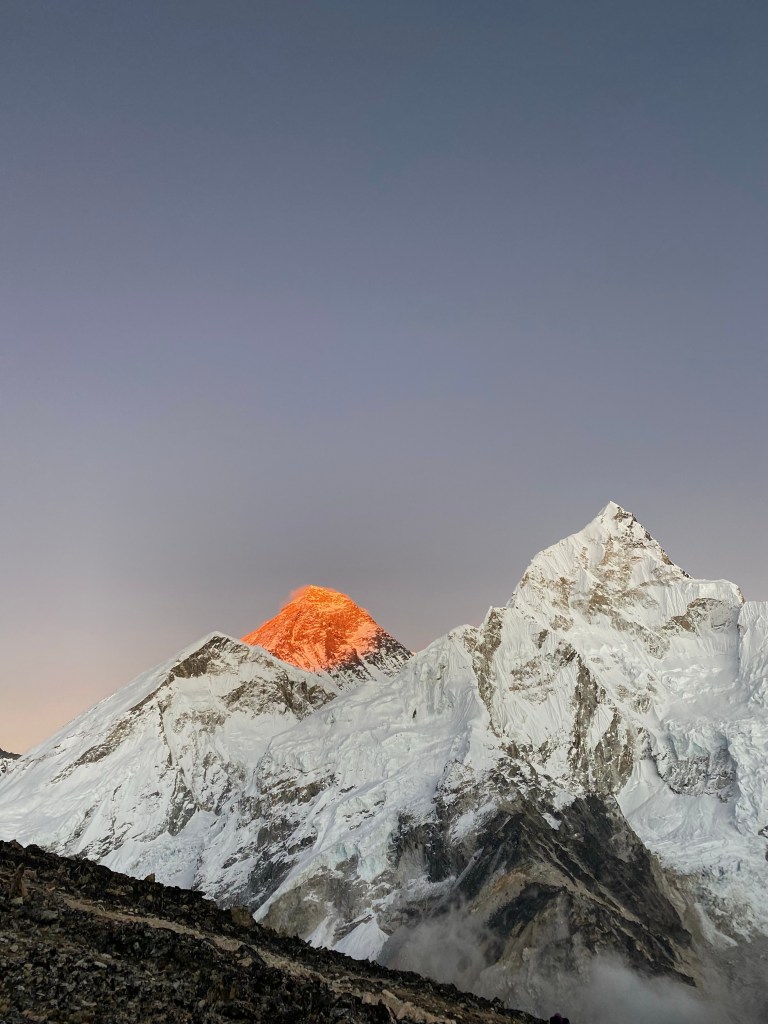
5. Drink plenty of water. On my final ascent of the hike, 2 hours uphill on Kala Patthar, a Tanzanian man who frequents Mt. Kili passed me on my death bed(rock) and bestowed the words, “Drink plenty of water. It’s the only altitude cure.” And my god, I chugged that near frozen water bottle. It’s true though!
 A Day’s Journey
Leave a comment