Wroclaw, Poland – May 2022
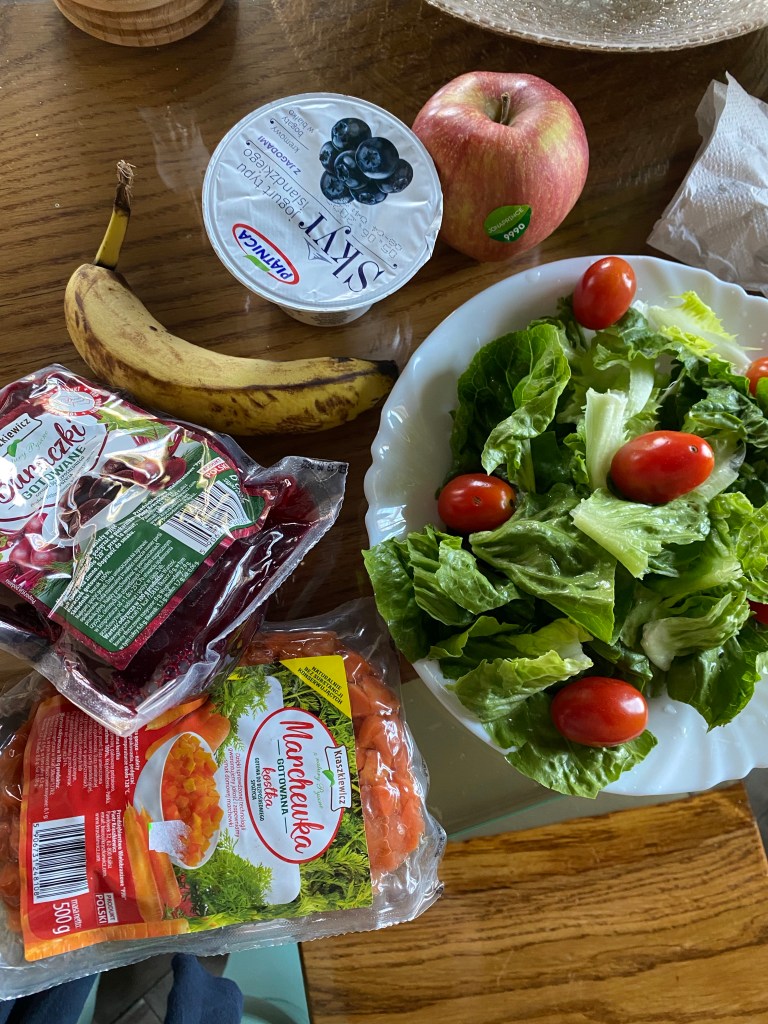
Whoever discovered that food could either rot and kill you OR ferment and feed you was genius. When you think of Poland maybe sauerkraut or borscht comes to mind. I visited Poland for a few days and was in fermentation heaven. So what is fermentation?
Fermentation takes place when the enzymes of microorganisms(bacteria, fungi, yeast) break down sugars without the use of oxygen (anaerobic). Fermentation takes place everyday in our bodies digestive and musculoskeletal systems. Each microorganism has a unique set of enzymes, meaning that the type and number of microorganism involved changes the taste of food products. The process has been used for about 9,000 years with ancient peoples crushing fruits and allowing it to sit to make products such as wine! It is thanks to French microbiologist Louis Pasteur that we know the microorganism responsible was yeast. There are three types of fermentation: ethanol, lactic acid, and hydrogen/methane gas fermentaion – all named after the product of fermentation.
Poland has long celebrated fermentation or “pickling,”- in fact they have a national holiday dedicated to it on September 29! The history of Poland involves long winters, changing borderlines, and long wars— it is no wonder Polish people mastered the art of food preservation, especially when times are tough. I was lucky in Poland to try a variety of fermented vegetables, such as pickled beets, carrots, cabbage. Let’s take pickled cabbage for example, giving us the beloved sauerkraut. Simply place sliced cabbage and salt in an airtight (remember it is anaerobic!) and let the bacteria get to work (aka lactic acid fermentation)! The process can take several months when left at relatively cool temperatures.
So why should we eat leftover food that we allowed bacteria to chemically alter? Easy- there are MANY reasons! The fermentation process actually raises the bioavailability of many nutrients, meaning that your body can use more of the nutrients in say, cabbage, after it has been fermented as opposed to eating it raw. Using the example of sauerkraut again- it is high in Vitamins C and K, as well as magnesium, calcium, folate, iron, potassium. Fermented foods also contains probiotics, which are the “good bacteria,” in your body. In the simplest terms, you can think of your body as having “good” and “bad” bacteria that help or hinder you digest food. Crowding out the bad bacteria with “good” bacteria, such as probiotics, can help improve the balance in your gut microbiome leading to improvements in you digestive, immune, and cardiovascular systems to name a few.
Here are a few examples of fermented food to add into your diet:
⁃ sauerkraut
⁃ Kimchi
⁃ Greek yogurt
⁃ Kefir
⁃ Kombucha
⁃ Tempeh
⁃ Miso
A word of caution- watch the sodium and/or sugar content before consuming! The best way to know what you are ingesting— try fermenting foods yourself!

 A Day’s Journey
Leave a comment