Namibia — June 2022
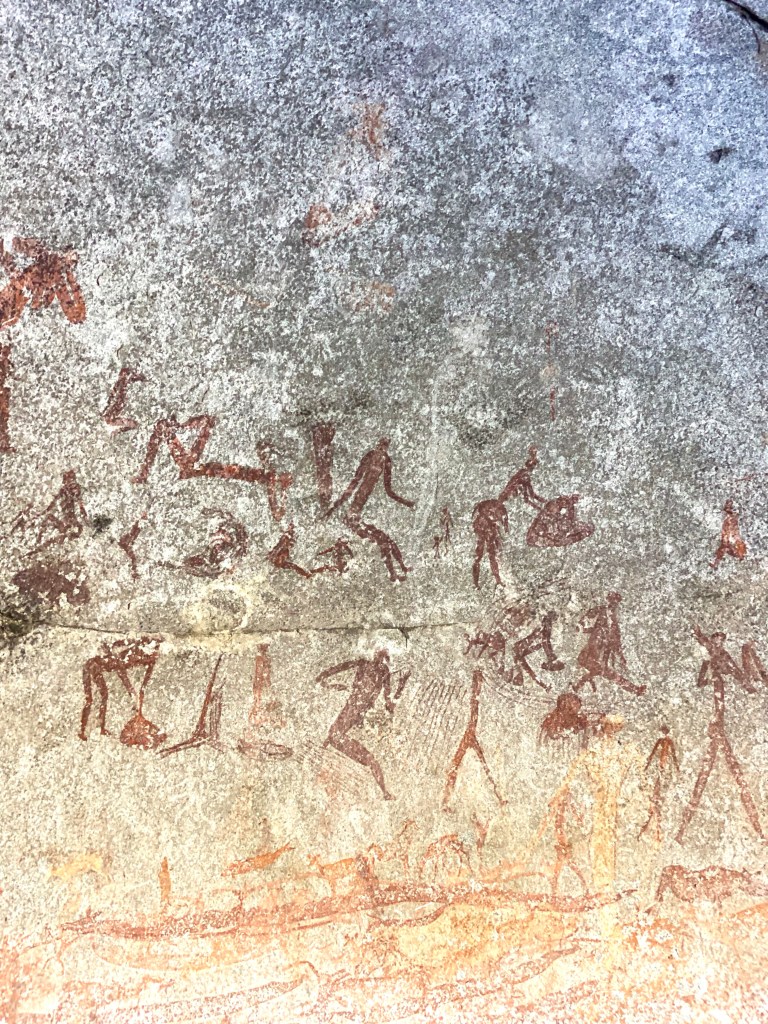
Namibia is one of the few homes left for the San Bushmen, with about 1/3 of the population left dwelling here. The San are the oldest population of humans currently on Earth -having directly descended from the original humans in Africa, and their DNA has been shown to have the highest genetic diversity in all current human populations. They lived as hunter-gatherer nomads for thousands of years until the mid-1900s when governments mandated modernization, thus causing them to take up farming.
One of the most striking features of the San is their innate altruism. As Hunter gatherers it is known that they eat the meat of a kill and have evolved adaptations to allow them to store fat in their buttocks in order to conserve the energy gained and not need another animal kill for 10-14 days. In between this time, they will forage for berries and small plants. When foraging, they will never eat all of the food from one bush with the idea in mind that other hungry human foragers will also come along looking for sustenance from this bush. This demonstration of altruism ensures that others in need will remain nourished as well.
In biology, altruism is defined as the concern for the well-being of others. There are two prevailing types of altruism- Kin altruism, whereby individuals exhibit altruism towards members of the same kin in order to secure evolutionary success and Reciprocal altruism, in which individuals and can expect something in return for their altruism. The San Bushmen acting altruistic towards strangers (non-kin) they may never encounter (non-reciprocal) cannot be explained by either of these prevailing theories. I found an interesting paper explaining cultural group selection with gene-culture convolution (Vlerick 2021), whereby conscious and voluntary reasoning has played a role in the development of human altruism.
My Africa trip has taught me a lot about altruism. The overland adventure is designed to be “participation camping.” Emphasis on- participation. All 20 of us are expected to help pitch camp, clean, chop food, and pack/unpack the lando. If one person slacks, the rest of the group becomes affected OR if everyone works together, the group benefits. Altruism also comes into play during daily activities such as showering and eating. If one person takes a long and hot shower, then the rest of the group will shower in the cold. If one person eats all the chapati at dinner, then the back of the line won’t eat – you get the picture. It was an interesting experience changing gears from solo travel- where life was all about Me and what Amanda wants to do- to group travel where the collective became the most important focus. Like the San bushmen, my overland group became my tribe. Every members experience on the trip mattered because one negative or positive event would affect everyone.
We can learn altruism from the San, who —starting a few centuries ago— have not been treated altruistically by newcomers to the area. The San have lived in Southern Africa for 20,000+ years, and it is extremely sad to see how new societal “norms” and pressures have completely changed their culture in a short span of time. Europeans and farming communities enslaved or destroyed the San people until conformity became the only option. It is impossible to be a hunter-gatherer when all of a sudden imaginary lines have been drawn in the sand causing the San to have to wonder whether an animal being hunted is “free” or “owned.” I challenge you to act in an altruistic manner in all situations. Go out of your way to help others, put someone else’s needs before your own, and be conscious of the outcomes of your behaviors. The world can use more conscious altruism.
 A Day’s Journey
Leave a comment